Pico Laser
Picosecond pulses shatter ink particles so your body clears them — safely, across a planned series.
Explore tattoo removal or fading for a cover-up. Your plan is tailored to your ink, skin and goals.
Book a consultation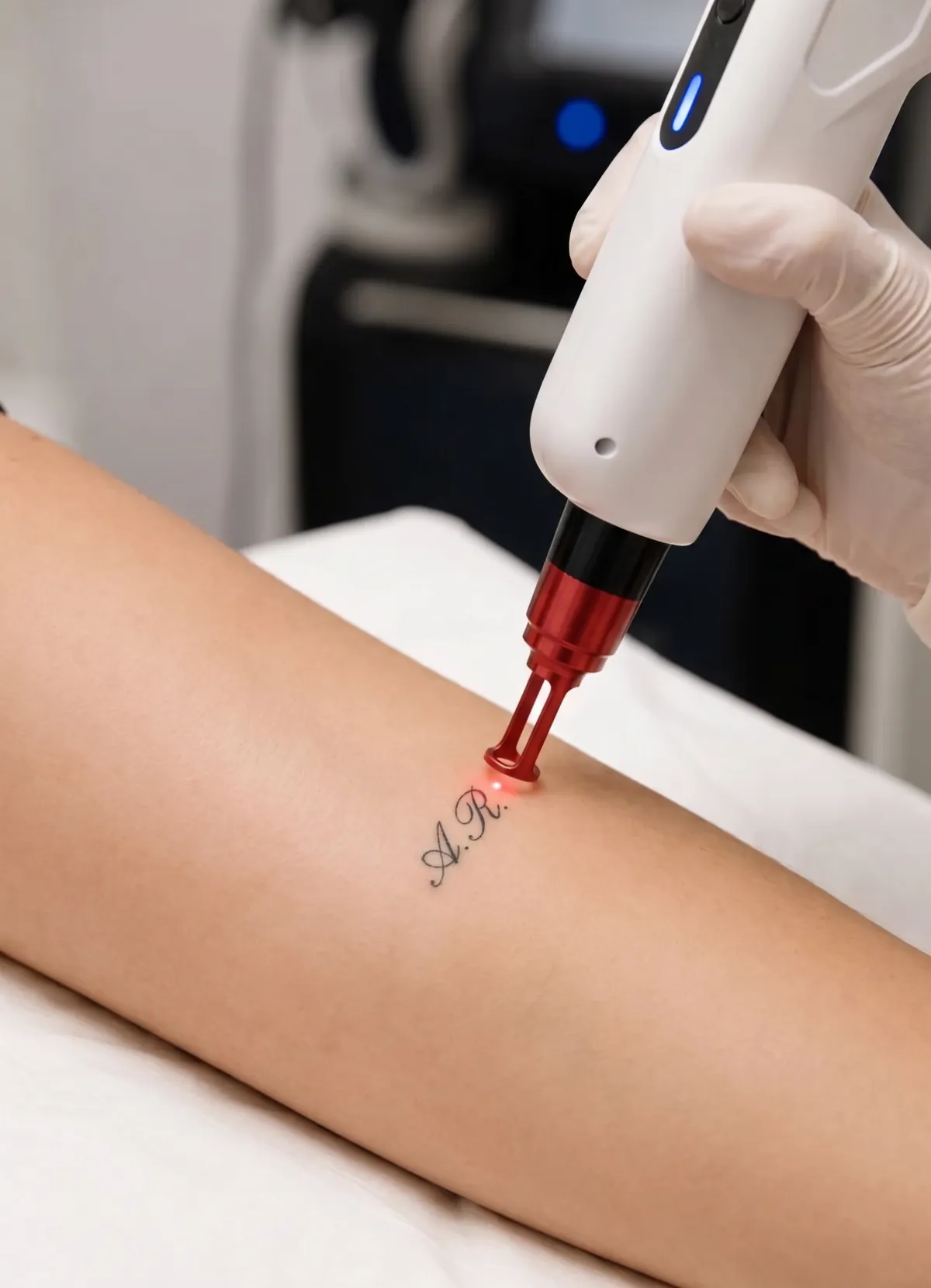
Laser tattoo removal uses short pulses of energy to fragment suitable tattoo pigment so the body can gradually clear it.
Removal is a process, not a single appointment: ink colour, density, depth, age, placement and your individual response all influence the number of sessions.
At neoSKiN, every plan begins with consultation. We assess the tattoo, your skin and your goals, whether you want maximum clearance or fading before a cover-up.
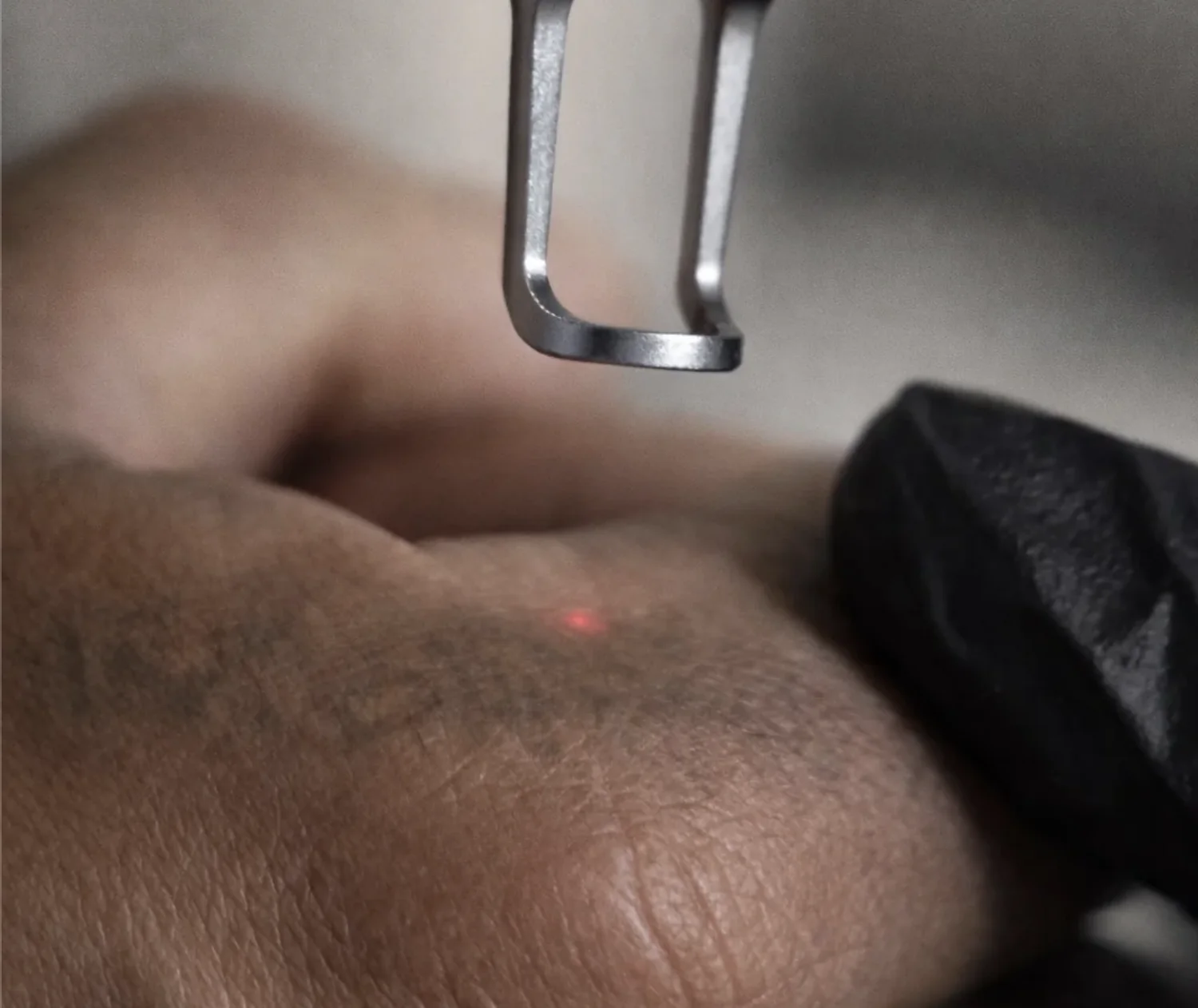
Professional and amateur tattoos may contain different pigments at different depths. Dense black ink often responds differently from coloured, white, flesh-toned or cosmetic pigments. Layered cover-ups can also require a longer plan.
It is not possible to guarantee complete clearance or an exact number of sessions. Some pigments may respond slowly, leave residual colour or change colour after laser exposure.
Pico laser delivers very short pulses selected for suitable pigment. The energy creates a photoacoustic effect that breaks pigment into smaller particles. The body clears these particles gradually between appointments.
Sessions are spaced to allow healing and clearance. Treating too frequently does not necessarily speed the process and may increase risk.
Your clinician will assess:
Avoid tanning and follow shaving or preparation instructions for the area. Tell us if the tattoo contains cosmetic, white, flesh-toned or unknown pigment.
Temporary whitening or “frosting”, redness, swelling, tenderness, blistering or crusting can occur. Follow aftercare closely, keep the area clean and protected, and do not pick healing skin.
Risks can include pigment change, texture change and scarring. Your clinician will discuss these in relation to your tattoo and skin.
There is no reliable universal number. Colour, density, depth, tattoo location, layering and individual clearance all affect the course. Your consultation provides an estimate, not a guarantee.
Different pigments absorb different wavelengths and some respond poorly. Cosmetic, white and flesh-toned pigments require particular caution because they may darken.
Spacing varies by tattoo, treatment response and healing. Sessions are commonly separated by a number of weeks so the body has time to clear pigment and the skin can recover.
Yes, fading rather than complete removal can be a treatment goal. Tell us about the planned cover-up so the course can be designed accordingly.
Picosecond pulses shatter ink particles so your body clears them — safely, across a planned series.
Between laser sessions, treated skin wants calm care and strict sun protection.
A 30-minute consultation with a senior clinician — honest advice and a written plan. $60, fully redeemable against treatment booked within two weeks.
Book a consultationOr call (03) 9699 1200 · 175 Wells Street, South Melbourne